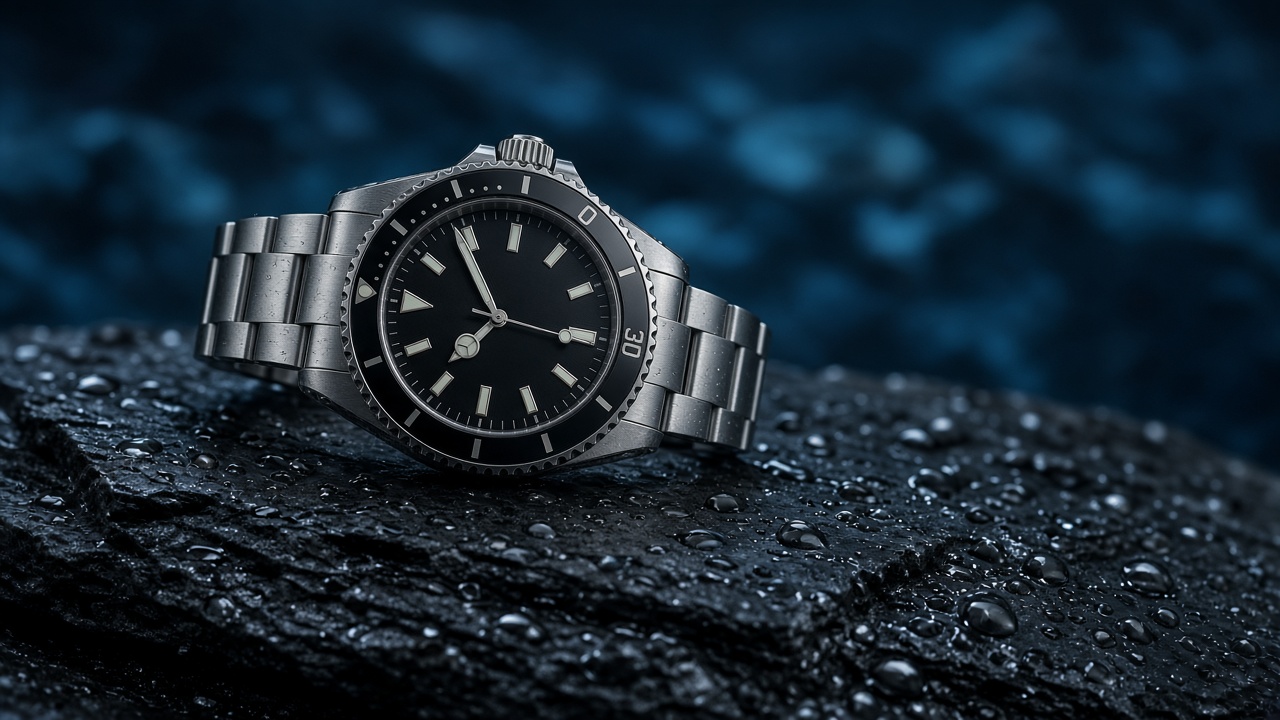


Few watches carry a story as big as the Omega Speedmaster. It started life as a racing chronograph, became the watch NASA chose for its astronauts, and went to the Moon on Buzz Aldrin’s wrist. Nearly seven decades after its debut, the Speedmaster Professional, better known as the Moonwatch, is still in production and still one of the most popular chronographs on the pre-owned market. We covered the space history in Omega Speedmaster: First Watch on the Moon. This Omega Speedmaster buying guide focuses on what matters when you shop: the key references, the movements inside them, and what to check before you buy one pre-owned.
A Racing Chronograph That Went to Space
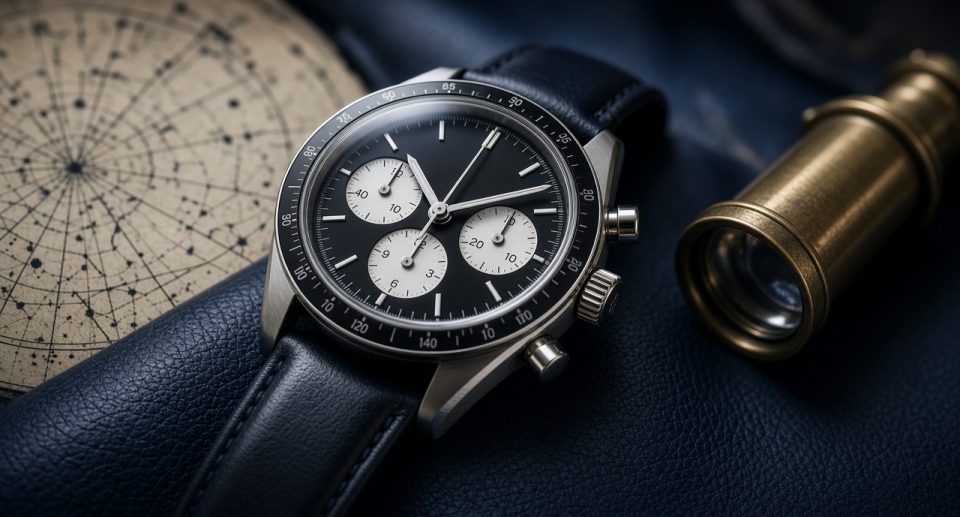
Omega introduced the Speedmaster in 1957 as a sport and racing chronograph. The first model, reference CK 2915, used the hand-wound Calibre 321 movement, and its name came from the tachymeter scale on the bezel, following Omega’s Seamaster and Railmaster names, according to Wikipedia. That first watch set the template collectors still recognize today: a three-register chronograph layout, a domed Hesalite (acrylic) crystal and simple, high-contrast markers.
Astronaut Wally Schirra took his own Speedmaster CK 2998 aboard Mercury-Atlas 8 in 1962. NASA then put several brands’ chronographs through a punishing series of tests covering heat, cold, vacuum, humidity, shock and vibration, and in March 1965 it selected the Speedmaster (Wikipedia). Ed White wore one on the first American spacewalk during Gemini 4 that June, and in July 1969 Buzz Aldrin wore his reference 105.012 on the lunar surface, while Neil Armstrong left his inside the lunar module as a backup. A year later, a Speedmaster helped the Apollo 13 crew time a critical 14-second engine burn on their way home.
The Movements, From 321 to 3861
The movement is the single biggest factor in how a Speedmaster wears, how it is serviced and how it is valued, so it is worth knowing the main generations.
Calibre 321
The original column-wheel chronograph movement, developed by Albert Piguet of Lemania, powered every early Speedmaster, including the pre-Moon references worn on Apollo 11 (Wikipedia). Vintage 321 watches are the most collectible and the most expensive. In September 2019 Omega brought the Calibre 321 back as a modern reissue built to replicate the original design.
Calibre 861 and 1861
In 1968 Omega switched to the Calibre 861, which replaced the column wheel with a cam mechanism and raised the beat rate from 18,000 to 21,600 vibrations per hour. Variants of it, including the long-running rhodium-plated Calibre 1861, powered most Speedmaster Professionals for more than five decades (Wikipedia). An 1861 Moonwatch is the classic modern choice and remains plentiful on the pre-owned market.
Calibre 3861
In January 2021 Omega updated the standard Speedmaster Professional with the Calibre 3861, adding a co-axial escapement and Master Chronometer certification, along with subtle design changes such as a stepped dial and a dot over the 90 on the bezel (Wikipedia). If you want to understand what that certification means, our guide to METAS and Master Chronometer certification explains it in detail.
Moonwatch or Something Else?
The Speedmaster name covers far more than the Moonwatch. Since the Speedmaster 125 of 1973, Omega has used it across a broad family of watches, including automatic, racing and analog-digital models (Wikipedia). The Speedmaster Automatic, informally called the Speedmaster Reduced, arrived in 1988 as a smaller, more affordable 39mm alternative to the 42mm Professional, and it was produced until 2009. If you want the watch that went to the Moon, look for a manual-wind Speedmaster Professional. If you prefer an automatic movement or a different case size, the wider Speedmaster family gives you plenty of options.
How to Choose the Right Speedmaster
- Decide between vintage and modern. Vintage references carry the history and the patina, but they need more careful inspection and service. A modern 1861 or 3861 watch is easier to wear every day.
- Choose your crystal. The traditional Moonwatch uses a Hesalite crystal, which is the material flown in space and can be polished if it scratches. Sapphire versions resist scratches better and, on many models, come with a display caseback.
- Remember it is hand-wound. A Speedmaster Professional has no rotor. Most owners enjoy the ritual of winding it each morning, but if you would rather not, look at an automatic Speedmaster.
- Try the size. The Professional’s 42mm case wears smaller than the number suggests thanks to its lugs and shape, but a smaller model may suit a slim wrist. Our guide to checking size and fit can help.
What to Check Before Buying a Pre-Owned Speedmaster
- Reference and serial numbers. Make sure the reference, movement and case details match each other and the watch’s claimed year.
- The bezel. Vintage aluminum bezel inserts fade and scratch, which collectors often welcome, but a replacement insert on a vintage watch affects value. Check that the bezel style fits the reference.
- Dial and hands. Original dials and hands with matching luminous material are worth far more than service replacements. Ask whether any parts have been changed.
- Chronograph function. Start, stop and reset the chronograph several times. The hands should move smoothly and return cleanly to zero.
- Service history. Ask when the watch was last serviced and by whom, since a full service on a vintage movement can be costly.
- Box and papers. Original paperwork and accessories add value and help confirm history, but they are not proof of authenticity on their own.
Above all, buy from a seller that authenticates every watch and stands behind it. Speedmasters have been made in many references over almost 70 years, so details vary, and an expert inspection matters more than any checklist.
Shop the Omega Speedmaster at TrueFacet
Whether you want a piece of space history or simply a chronograph that will never go out of style, buying pre-owned is a smart way to own a Speedmaster. Browse our full Omega Speedmaster collection, look at the classic hand-wound Omega Speedmaster Moonwatch in stainless steel, 42mm, or explore every model in our Omega watches collection. Every piece is backed by our Authenticity Promise.