


The Complete Guide to Birthstones by Month: History, Meaning & How to Wear Yours


For centuries, birthstones have carried more than just beauty—they’ve held meaning, protection, and personal connection. From ancient Ayurvedic traditions to modern jewelry boxes, these gemstones link us to our month of birth through color, lore, and energy. But with two distinct lists—traditional (dating back to 15th-century Europe) and modern (standardized in 1912 by the American National Association of Jewelers)—confusion abounds. Is your May stone emerald or agate? Should October be opal or tourmaline?
Here’s everything you need to know: the official birthstones for every month, their historical roots, symbolic meanings, and how to choose the right one—whether for a gift, heirloom, or personal talisman.
Birthstones by Month: Traditional vs. Modern
While the modern list is widely used today for its consistency and commercial clarity, the traditional list reflects deeper cultural and spiritual roots. Many months share the same stone—but others diverge significantly.
| Month | Modern Birthstone | Traditional Birthstone | Key Meaning |
| January | Garnet | Garnet | Protection, strength, passion |
| February | Amethyst | Amethyst | Clarity, calm, spiritual balance |
| March | Aquamarine | Bloodstone | Courage, vitality, emotional healing |
| April | Diamond | Diamond | Eternal love, invincibility, purity |
| May | Emerald | Agate | Renewal, wisdom, harmony |
| June | Pearl, Alexandrite, Moonstone | Agate, Pearl | Intuition, transformation, innocence |
| July | Ruby | Ruby | Passion, power, prosperity |
| August | Peridot | Sardonyx, Carnelian | Abundance, growth, confidence |
| September | Sapphire | Sapphire | Wisdom, loyalty, inner peace |
| October | Opal, Tourmaline | Opal | Hope, creativity, emotional truth |
| November | Topaz, Citrine | Topaz | Warmth, joy, abundance |
| December | Tanzanite, Zircon, Turquoise | Lapis Lazuli, Turquoise | Insight, communication, protection |
Note: In 2016, the American Gem Trade Association added spinel as an alternative for August, and tanzanite for December—reflecting evolving market availability and consumer demand.
Why Two Lists? A Brief History
- Traditional birthstones originate from biblical, Ayurvedic, and European folklore. The 12 stones of Aaron’s breastplate (Exodus 28) were later linked to the 12 months and zodiac signs.
- Modern birthstones were established in 1912 to create a standardized, commercially viable list that accounted for gem availability and affordability.
- June and October are the most contested: June now recognizes three stones (pearl, alexandrite, moonstone), while October honors both opal (traditional) and tourmaline (modern).
Birthstone Meanings: More Than Just Pretty Stones
Each gem carries symbolic weight:
- Garnet (January): Worn by travelers for protection; believed to ignite passion and perseverance.
- Amethyst (February): Ancient Greeks thought it prevented intoxication; today, it symbolizes mental clarity.
- Aquamarine (March): Sailors carried it for safe passage; represents calm and clear communication.
- Diamond (April): Long associated with invincibility and eternal bonds—hence its dominance in engagement rings.
- Emerald (May): Cleopatra’s favorite; symbolizes rebirth, love, and foresight.
- Pearl (June): Formed through irritation—a metaphor for beauty born from challenge.
- Ruby (July): Called the “king of gems” in Sanskrit; represents vitality and divine love.
- Peridot (August): One of the few gems formed in Earth’s mantle; associated with light and renewal.
- Sapphire (September): Worn by royalty for wisdom; blue sapphire specifically symbolizes faithfulness.
- Opal (October): Revered by Aboriginal Australians as the “fire of the desert”; embodies hope and spontaneity.
- Topaz (November): Ancient Egyptians linked golden topaz to the sun god Ra; represents warmth and generosity.
- Turquoise (December): Used in Native American and Persian cultures for protection and spiritual grounding.
How to Choose the Right Birthstone
- For gifts: Stick to the modern list—it’s what most people expect. A December baby will likely anticipate turquoise or tanzanite, not lapis lazuli.
- For spiritual or heirloom pieces: Consider the traditional stone for deeper historical resonance (e.g., bloodstone for March).
- For daily wear: Prioritize durability. Pearls and opals are softer (5.5–6.5 on Mohs scale)—best for earrings or pendants. Rubies, sapphires, and diamonds (9–10) withstand daily ring wear.
- For authenticity: Ensure natural (not synthetic) stones when possible. Ask for certification if spending over $500.
Birthstones in Jewelry: Styling Tips
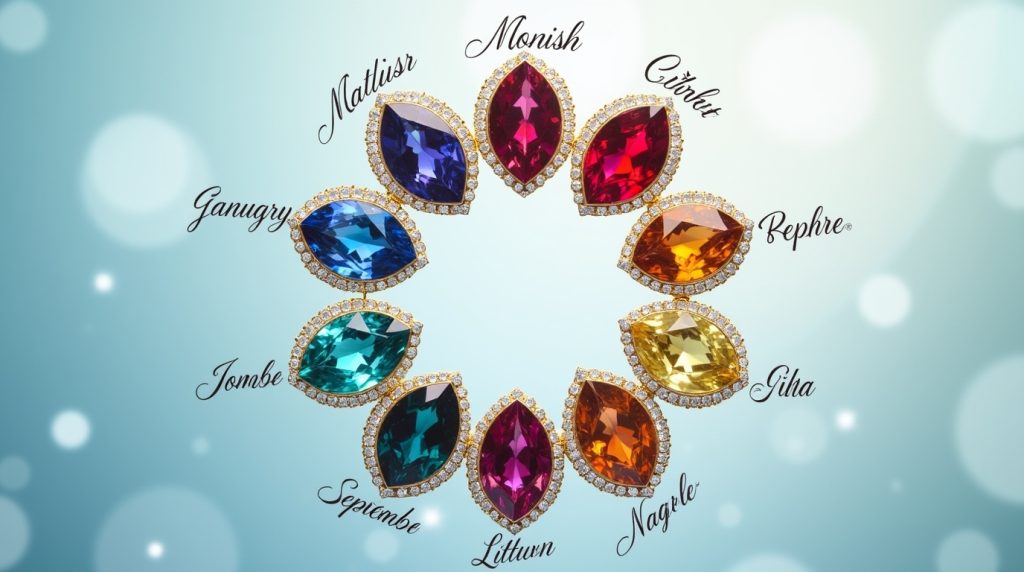
- Minimalist: A single birthstone solitaire pendant or stud earring offers subtle personalization.
- Stackable: Mix birthstones of family members in a ring stack or bracelet.
- Heirloom-ready: Vintage-inspired settings (halo, three-stone) elevate even modest stones into legacy pieces.
- Men’s options: Signet rings with birthstone accents or cufflinks in darker stones (garnet, sapphire, onyx) offer understated elegance.
Care note: Pearls, opals, and emeralds require special care—avoid ultrasonic cleaners, harsh chemicals, and prolonged sun exposure.
The Rise of Alternative Birthstones
Modern jewelers increasingly honor personal preference over rigid calendars:
- Alexandrite (June): Color-changing rarity makes it a coveted splurge.
- Spinel (August): Once mistaken for ruby, now prized for its vivid hues and ethical sourcing.
- Tanzanite (December): Found only in Tanzania; deep blue-violet tones rival sapphire.
These additions reflect a shift toward individuality—your birthstone doesn’t have to be dictated by a calendar if another gem resonates more deeply.
Final Thought: Your Stone, Your Story
Birthstones aren’t just decorative. They’re tiny vessels of history, culture, and personal identity. Whether you wear your May emerald as a reminder of spring’s renewal or gift a February amethyst for its calming energy, these gems connect us to something larger than ourselves.
So go beyond the list. Learn your stone’s story. And let it become part of yours.