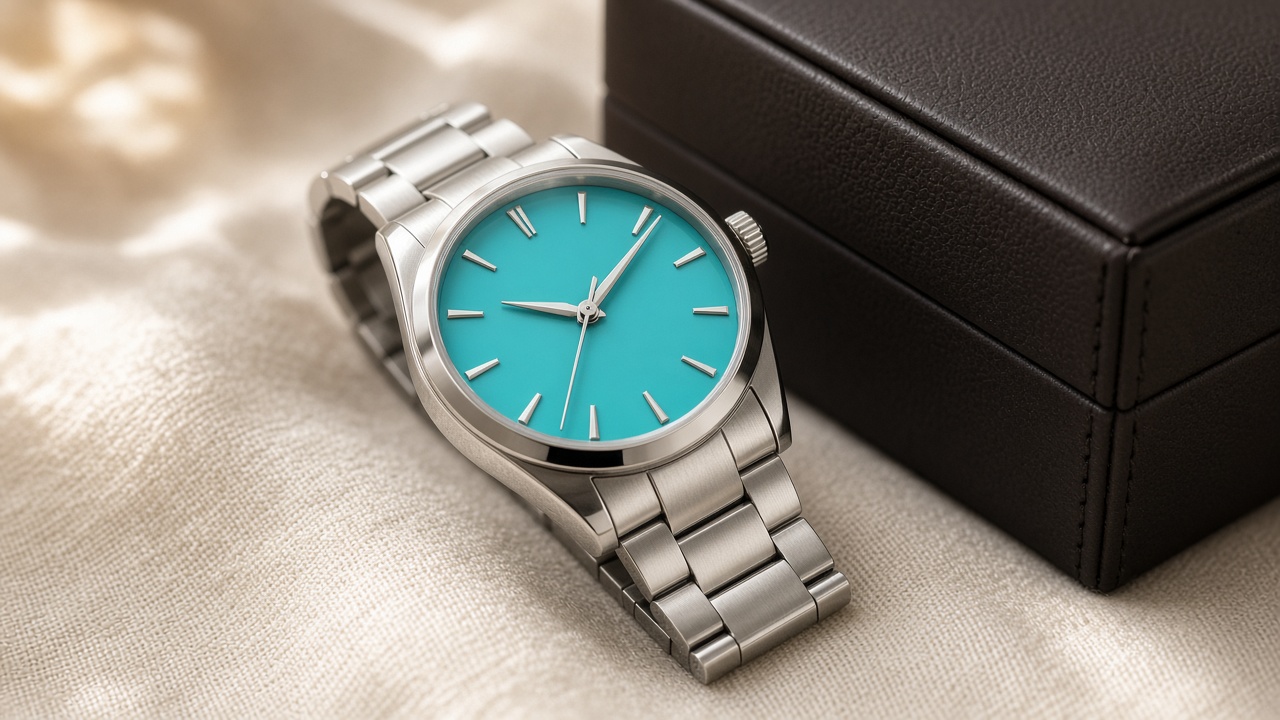
Rolex Yacht-Master Buying Guide: Sizes, Rolesium, Key References and What to Check

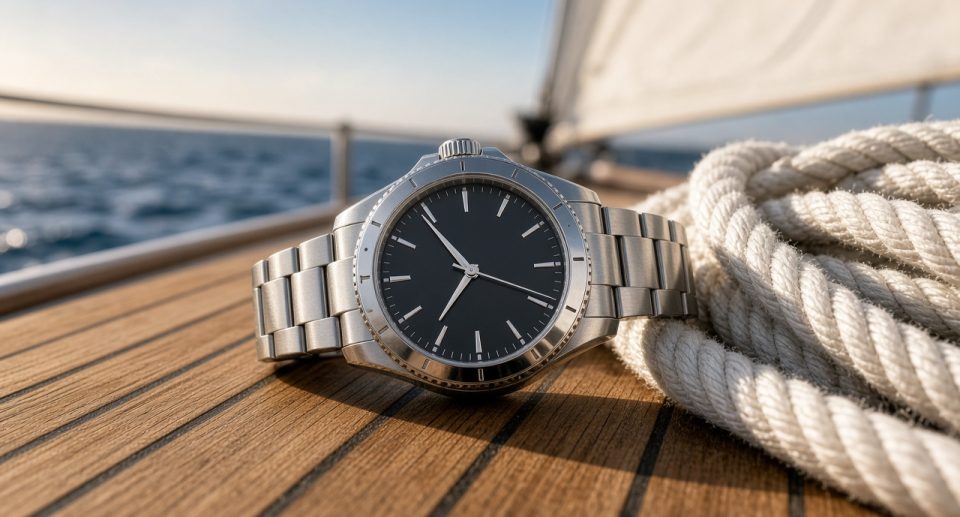

The Submariner and the GMT-Master II get most of the attention, but the Rolex Yacht-Master has quietly become one of the most interesting watches in the Professional collection. Rolex says it has combined “functionality and nautical style since its launch in 1992,” and today it is offered in three sizes and in materials that range from gold to platinum-and-steel Rolesium to RLX titanium (Rolex). This Rolex Yacht-Master buying guide covers the watch’s history, the sizes and key references, how it differs from a dive watch, and what to check before you buy pre-owned.
A Quick History
The first Yacht-Master, reference 16628, arrived in 1992 as a 40 mm watch in solid 18k yellow gold, powered by the Calibre 3135 and water resistant to 100 meters (Fratello). Smaller versions followed in 1994: a 35 mm mid-size (ref. 68628) and a 29 mm ladies’ model (ref. 69628) (Fratello). Wikipedia notes this was the first time a Rolex Professional watch was offered smaller than the standard size.
The real turning point was Rolesium. Rolex describes it as a combination of an Oystersteel case and bracelet with platinum elements, and says it was introduced on the Yacht-Master in 1999 (Rolex). The 40 mm Rolesium reference was the 16622, launched alongside 35 mm and 29 mm versions (Fratello). Because most of the watch was steel, it brought the Yacht-Master to a much wider audience. A steel-and-gold Rolesor version, ref. 16623, followed in 2005 (Fratello).
In 2015 Rolex introduced its Oysterflex bracelet on the Yacht-Master 37 (Rolex). The Oysterflex uses two flexible metal blades overmoulded with a high-performance elastomer (Rolex), and it debuted on Everose gold models in 37 mm (ref. 268655) and 40 mm (ref. 126655) (Wikipedia). Most recently, in 2023, Rolex released a Yacht-Master 42 in RLX titanium, ref. 226627 (Wikipedia), a special grade 5 titanium alloy that Rolex selects for its strength and lightness (Rolex).
Yacht-Master vs. a Dive Watch
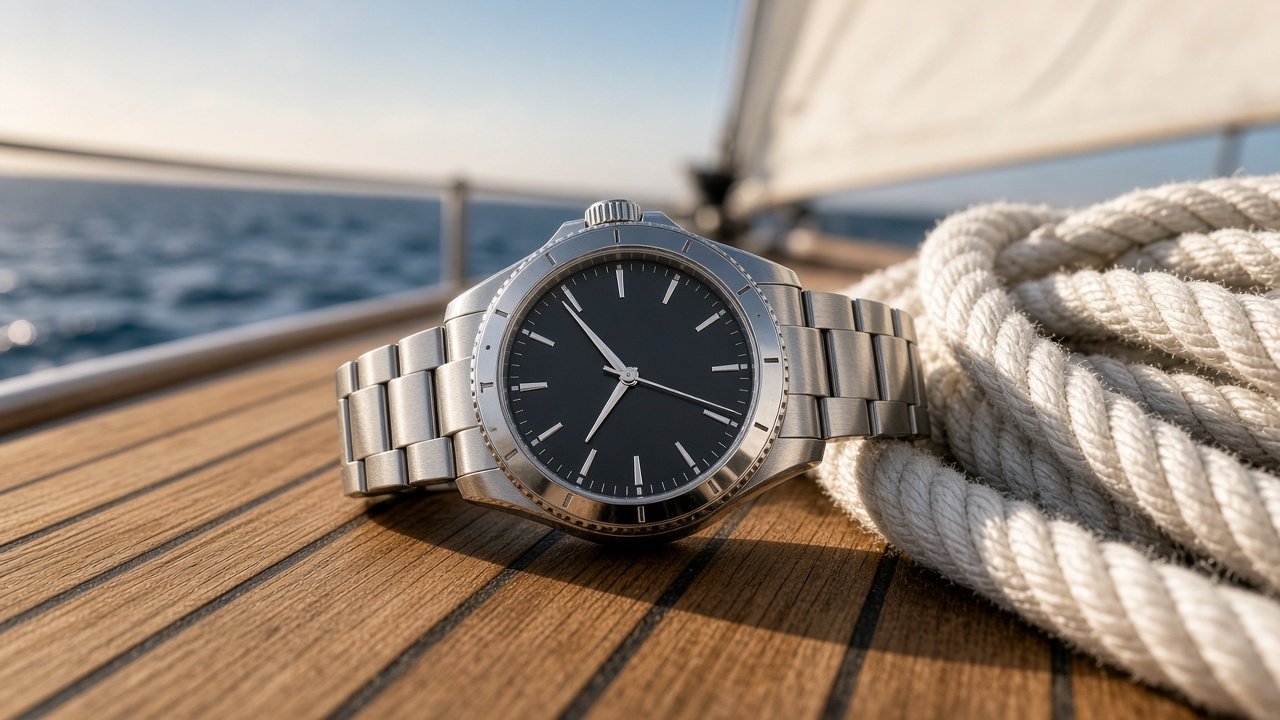
The Yacht-Master borrows the Oyster architecture of Rolex’s sports watches, but it is built for the deck rather than the deep. Its 60-minute rotating bezel turns in both directions so a sailor can time a race leg (webChronos), while a dive bezel such as the Submariner’s turns only one way as a safety feature. Water resistance is 100 meters (webChronos), which is plenty for swimming and sailing but less than a dedicated diver. The raised, polished bezel with its numerals in relief is also the watch’s most recognizable design cue. If you are deciding between the two, our Yacht-Master vs. Submariner comparison goes deeper.
Sizes and Key References
Rolex currently offers the Yacht-Master in 37, 40 and 42 mm (Rolex). Here is how the main references line up:
- Yacht-Master 40 Rolesium (ref. 126622): the current steel-and-platinum model. It measures 40 mm across and 11.5 mm thick and uses the Calibre 3235 with about 70 hours of power reserve (webChronos). Its predecessors are the 116622 and the original 16622 (Ultimate Watch).
- Yacht-Master 40 Everose (ref. 126655): Everose gold on the Oysterflex bracelet (Wikipedia). The earlier 116655 introduced the look in 2015 (Ultimate Watch).
- Yacht-Master 37: the smaller size, offered in Rolesium and in Everose on Oysterflex (ref. 268655) (Wikipedia). It uses the Calibre 2236 (webChronos).
- Yacht-Master 42 white gold (ref. 226659): an 18k white gold case on Oysterflex (Ultimate Watch).
- Yacht-Master 42 RLX titanium (ref. 226627): 42 mm across and 11.6 mm thick, with the Calibre 3235 (webChronos). A prototype was worn by sailor Ben Ainslie in 2020 before the watch was released (Wikipedia).
Do not confuse the Yacht-Master with the Yacht-Master II. The II is a separate, larger regatta chronograph with its own references, such as the 116680 in steel and the 116688 in yellow gold (Ultimate Watch).
Which One Should You Buy?
For most buyers, the 40 mm Rolesium is the classic choice: it wears like a steel sports watch, and the platinum bezel adds a subtle upgrade you notice up close. Choose the 37 mm if you prefer a smaller watch or want a model that suits a wider range of wrists. The Everose and white gold versions on Oysterflex are the dressier, more comfortable-in-summer options, and the RLX titanium 42 is the pick for anyone who wants a light, modern tool watch.
On the pre-owned market, the earlier 16622 and 116622 are a way into Rolesium for less than the current model. The trade-off is the older Calibre 3135 instead of the newer Calibre 3235, which Rolex introduced in 2015 and which is used in today’s Yacht-Master 40 and 42 (webChronos).
What to Check Before You Buy Pre-Owned
- Reference and serial: confirm the reference matches the case material, size and movement claimed in the listing.
- Bezel action: the bezel should turn smoothly in both directions and line up correctly. The raised numerals should be crisp, not worn flat.
- Polishing: look for soft edges on the case and lugs, a sign of heavy polishing that lowers value.
- Oysterflex condition: check the elastomer for cuts, cracks or stretching, and make sure the clasp closes securely.
- Service history: ask when the watch was last serviced and by whom, and whether original parts were kept.
- Box and papers: not required, but they help with provenance and resale.
No single detail proves a watch is genuine. The safest route is to buy from a seller who inspects and authenticates every piece before it ships.
Shop Rolex at TrueFacet
Browse our pre-owned Rolex watches, or explore our full luxury watches collection. If you are comparing sports models, our Rolex Submariner buying guide and Rolex GMT-Master II buying guide are natural next reads. Every piece is backed by our Authenticity Promise, and if you have questions about a specific watch, our team is happy to help at [email protected].