
The Holy Trinity of Watchmaking: Legacy, Craft, and Why These Three Houses Endure



The term “Holy Trinity” appears often in watch forums, sales pitches, and collector circles—but rarely with the depth it deserves. At its core, it refers to Patek Philippe, Audemars Piguet, and Vacheron Constantin: three Swiss maisons bound not by marketing, but by a shared covenant—to pursue horological excellence without compromise, even when the world demands otherwise.
This isn’t a ranking. It’s not about price tags, celebrity endorsements, or Instagram clout. It’s about centuries of accumulated mastery, expressed through hand-beveled bridges, guilloché dials, and movements designed to outlive their owners. In an age of mass production and smartwatch disruption, these three houses remain steadfast in their belief: that a watch is not a gadget, but a legacy.
Why These Three? A Legacy Forged in Time
Patek Philippe: The Steward of Generations
Founded in 1839, Patek Philippe built its reputation on complications that span lifetimes. Its archive holds every part since inception—enabling service of a 1900 pocket watch today. The brand’s ethos is captured in its famous motto: “You never actually own a Patek Philippe. You merely look after it for the next generation.”
This isn’t poetry—it’s policy. From the Grandmaster Chime (20 complications) to the humble Calatrava, every movement is designed for disassembly, repair, and transmission across centuries. Patek doesn’t chase trends; it cultivates continuity.
Audemars Piguet: The Disruptor with Discipline
In April 1972, amid the quartz crisis that decimated Swiss watchmaking, Audemars Piguet did the unthinkable: it launched the Royal Oak—a luxury sports watch in stainless steel, with visible screws and an octagonal bezel. It was heresy. It was genius.
But AP’s rebellion was rooted in mastery. The case required 40 hours of hand-finishing. The ultra-thin Calibre 2121 (based on Jaeger-LeCoultre’s legendary 920) proved AP could innovate without sacrificing precision. Today, while Royal Oak variants dominate, AP’s true Trinity status lies in its ability to balance iconoclasm with integrity—releasing avant-garde pieces like the Code 11.59 while maintaining hand-finished movements in every watch.
Vacheron Constantin: The Quiet Perfectionist
Established in 1755, Vacheron Constantin is the oldest continuous watchmaker in the world. Its motto—“Do better if possible, and that is always possible”—isn’t aspirational; it’s operational. This drove the creation of the Reference 57260 (57 complications) and its successor, the Berkeley (63 complications)—the most complex timepiece ever made.
Unlike its peers, Vacheron rarely shouts. Its brilliance hides in details: hand-guilloché dials, engraved balance cocks, and movements finished to Geneva Seal standards. It’s the Trinity member most revered by watchmakers—not collectors.
Debunking the Myths

Myth: The Trinity is about exclusivity or price.
Reality: While all three command high prices, their status comes from technical rigor. A $20,000 Vacheron Patrimony embodies the same finishing standards as a $1M Les Cabinotiers.
Myth: Rolex or Jaeger-LeCoultre belong in the Trinity.
Reality: JLC is the “watchmaker’s watchmaker”—its Calibre 920 powered the Royal Oak and Nautilus—but it supplies movements to others, diluting its “pure” independence. Rolex excels in engineering and ubiquity but prioritizes robustness over haute horlogerie finishing.
Myth: The term is official.
Reality: “Holy Trinity” emerged organically among collectors in the 1970s–80s. None of the three brands use it in marketing. It’s a fan designation—a testament to organic respect.
What About “Trinity” or “Trilogy” Watches?

Don’t confuse the “Holy Trinity” with branded collections:
- Cartier Trinity: A jewelry line (three interlocking rings), not watches.
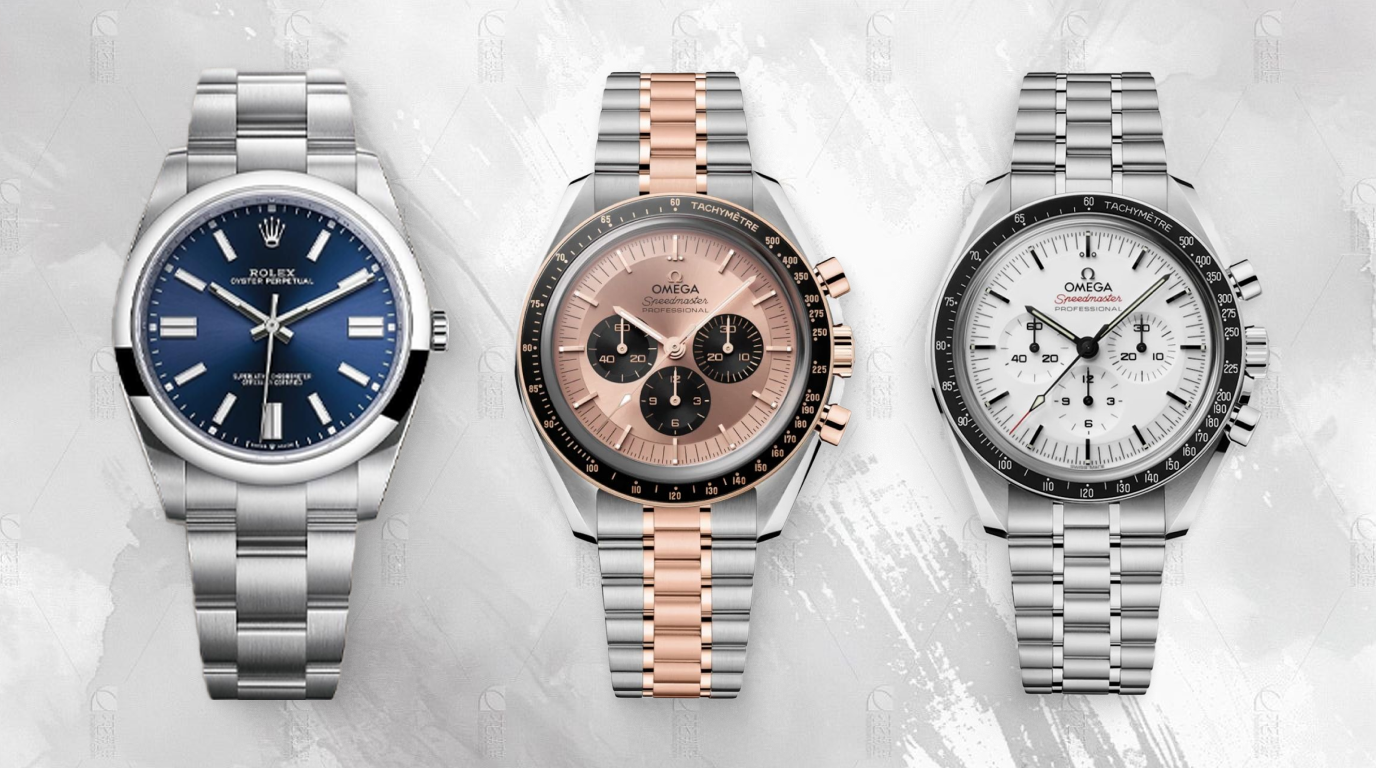
- Trilogy sets: Marketing bundles (e.g., Omega’s trio of Speedmasters)—not horological institutions.
The Holy Trinity isn’t a product. It’s a standard.
Is the Trinity Still Relevant?
Critics argue the term is outdated—that independents like F.P. Journe or Richard Mille now push boundaries further. And they’re partly right. But the Trinity’s relevance isn’t about being first—it’s about being last.
While trends come and go, these three remain committed to:
- In-house movement development
- Hand-finishing (perlage, anglage, Côtes de Genève)
- Serviceability across centuries
- Resistance to quartz and smartwatch disruption
In an age of fast luxury, they are the antidote.
Final Thought: More Than a Label—A Lens

Calling Patek, AP, and Vacheron the “Holy Trinity” isn’t worship—it’s recognition. It’s shorthand for a shared belief: that a watch should outlive its owner, inspire its maker, and humble its wearer.
You don’t need to own one to appreciate them. But understanding why they stand apart helps you see all watches more clearly—not as status symbols, but as vessels of human ingenuity.
And that’s a trinity worth honoring.